

What the change may mean for patent applicants
A pre-appeal brief conference can offer a relatively inexpensive opportunity to challenge a patent rejection before preparing a full appeal brief. In my practice, however, we rarely recommend one unless the record presents a particularly clear error. A focused five-page request may produce only a check-box decision indicating that the application should proceed to appeal, leaving the applicant with little insight into how the panel evaluated the arguments.
A recent USPTO change gives applicants a reason to take another look. In a ... Read More ›


For many consumers, finding a good “dupe” is not a mistake. It’s the goal. Rather than being tricked into believing they are buying a luxury product, shoppers increasingly seek affordable alternatives, knowing that they are not buying the high-end product being imitated. This trend creates a practical problem for all brands, especially fashion brands, where a product’s appearance may be an important part of its appeal and brand identity. Trademark infringement traditionally turns on whether consumers are likely to be confused. If consumers know they are buying a dupe, is ... Read More ›


A company may spend millions of dollars prosecuting and maintaining a patent portfolio designed around products, markets, and competitive threats identified five or ten years ago. The portfolio may contain excellent patents. The harder question is whether they are the patents the company would choose to own today.
Businesses change faster than patent portfolios. Products evolve, R&D priorities shift, companies enter new markets and make acquisitions, and new competitors emerge. Patents, by contrast, can remain in force for decades. Even a well-managed portfolio can ... Read More ›

Aggressive IP enforcement can be a powerful tool for protecting product designs, brand equity, and market position. But the related proceedings between Deckers Outdoor Corporation and Last Brand, Inc., d/b/a Quince, show the other side of that strategy: when enforcement becomes sufficiently broad, repetitive, or unsuccessful, the enforcement campaign itself may become the subject of litigation.
Following the jury verdict in Deckers Outdoor Corp. v. Last Brand Inc., Quince did not simply declare victory and move on. As discussed in our companion post on the Deckers jury trial ... Read More ›

On the surface, design patents often look straightforward: a handful of drawings, one claim, and a short specification (description). But the recent path of Deckers Outdoor Corporation’s U.S. Design Patent No. D927,161 (161 Patent) shows how deceptively complex design-patent enforcement can become once a patent moves from prosecution to PTAB challenge to jury trial.
The ’161 Patent survived an inter partes review (IPR) challenge at the institution stage. Yet the same design patent later went to trial, where a jury found infringement but also found the patent invalid ... Read More ›


The February 2026 federal district court and ITC complaints filed by General Motors against various aftermarket parties allegedly working “in concert” in the automotive replacement-parts market portend a new chapter in design-patent enforcement litigation. They may also provide a testing ground for two important Federal Circuit decisions: Automotive Body Parts Ass’n v. Ford Global Technologies, LLC, (“ABPA”) in 2019, and LKQ Corp. v. GM Global Technology Operations LLC,) (“LKQ”) in 2024. In those decisions, the Federal Circuit confirmed, on the one hand, in ... Read More ›
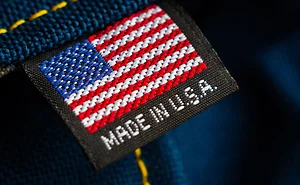
The Fourth of July is a natural opportunity for brands to focus on patriotic messaging, especially around America’s 250th celebration.
“Made in USA,” “American made,” “Built in America,” flag imagery, red, white, and blue packaging, and references to American workers or craftsmanship are all powerful marketing tools. They are also high risk advertising claims when the product, components, or manufacturing process do not fully support the claim. Accordingly, here is a timely reminder for companies to review how U.S. origin claims appear across packaging ... Read More ›


Increasingly, public AI tools that appear to be impressive are tempting to use for research, technology development, document preparation, and general queries on a variety of consequential issues including law in general, and patents in particular. However, submitting information to a public AI tool can result in several overlapping dangers, such as patentability problems, loss of trade secret protections, breach of confidentiality obligations, and even export-control violations.
Below, this article outlines some of the dangers that individuals, companies, and law firm ... Read More ›

Artificial intelligence (AI) is now a part of U.S. design patent examination, but not in the way some practitioners may expect. The latest public USPTO materials do not identify a new, post-DesignVision AI tool dedicated to design patent examination. Instead, the more important development appears to be that DesignVision has moved from a newly announced search tool to a routine part of the design examination workflow.
The USPTO launched DesignVision in July 2025 as “the first artificial intelligence (AI)-based image search tool available to design patent examiners” through ... Read More ›


In most commercially significant inventions, strategic filing of various types of “child” patent applications (patent applications extending from an original or “parent” patent application) in various worldwide jurisdictions is useful in capturing the full value of an original invention. The types of child applications include continuation, continuation-in-part, and divisional applications. The following notable distinctions are worth considering before filing a child application in any jurisdiction.
The first distinction is between continuation and ... Read More ›
Subscribe
Recent Posts
- A Promising Change to USPTO Pre-Appeal Review: A Reason to Reconsider the Procedure?
- The Dupe Economy: What Fashion Brands Can and Can't Do About Copycats
- Aligning IP Strategy with Business Reality: A Guide to Patent Portfolio Reviews
- When IP Enforcement Becomes the Story: Trade Dress, Antitrust, and Fee-Shifting After Deckers v. Quince
- Design Patents in the Real World: Lessons from Deckers’ UGG® Design Patent
- Charting the Next IP Course: Design Patents, Software Platforms, and the Automotive Aftermarket
- America at 250: Made in USA Claims Deserve a Fresh Look Before the 4th of July
- Patent Danger in the Age of Free AI Tools
- Design Patent Examination at the USPTO: DesignVision, AI, and the New Rules for Digital Designs
- Extending Your Patent: Continuation and Divisional Patent Practices & Strategies in Worldwide Jurisdictions
Archives
- October 2026
- September 2026
- July 2026
- June 2026
- May 2026
- April 2026
- March 2026
- February 2026
- December 2025
- November 2025
- October 2025
- September 2025
- July 2025
- June 2025
- May 2025
- April 2025
- February 2025
- January 2025
- November 2024
- September 2024
- August 2024
- June 2024
- May 2024
- April 2024
- February 2024
- January 2024
- December 2023
- November 2023
- October 2023
- September 2023
- August 2023
- July 2023
- May 2023
- April 2023
- March 2023
- February 2023
- January 2023
- October 2022
- August 2022
- June 2022
- May 2022
- April 2022
- March 2022
- February 2022
- January 2022
- December 2021
- November 2021
- October 2021
- September 2021
- August 2021
- July 2021
- June 2021
- May 2021
- April 2021
- March 2021
- February 2021
- January 2021
- December 2020
- November 2020
- October 2020
- August 2020
- July 2020
- June 2020
- May 2020
- April 2020
- March 2020
- February 2020
- January 2020
- November 2019
- October 2019
- September 2019
- June 2019
- April 2019
- February 2019
- January 2019
- October 2018
- July 2018
- June 2018
- May 2018
- April 2018
- March 2018
- February 2018
- January 2018
- December 2017
- November 2017
- October 2017
- August 2017
- July 2017
- May 2017
- April 2017
- March 2017
- February 2017
- January 2017