Season 6 Ep #6 Beyond Words: How Color, Sound, and Scent Become Non-Traditional Trademarks
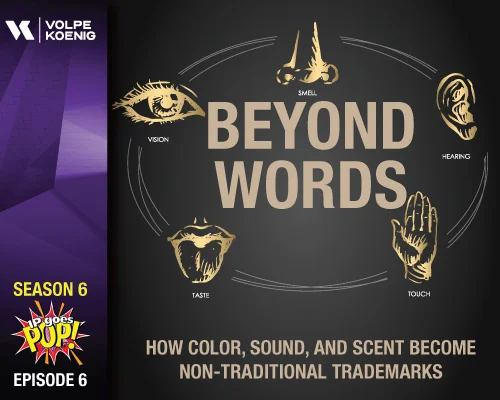
What color says luxury before you open the box? What sound makes you grab the popcorn before a movie starts? In this episode of IP Goes Pop!®, hosts Michael Snyder and Joseph Gushue explore how color, sound, and even scent can become a protectable trademark that signals brand identity just like any word mark or logo design.
The episode starts with a look at unusual kinds of media, like the short-lived “Smell-O-Vision” from the 1960s and John Waters’ scratch-and-sniff Odorama cards in his 1981 film Polyester. It then jumps to modern storytelling twists like The Artist and Netflix’s interactive Black Mirror: Bandersnatch, which itself sparked a trademark suit. Each pop culture moment shows how creative, sensory experiences grab our attention.
It turns out that non-traditional indicators of course can be legally protected, with some work. Mike and Joe break down the rules behind non-traditional trademarks: proof of secondary meaning under Qualitex v. Jacobson, the functionality bar that blocks protection for necessary or utilitarian product features, and the wording precision required to define the scope of such unusual marks. The hosts then go through real-world examples of active nontraditional trademarks, including:
- Tiffany & Co.’s robin’s-egg blue on jewelry boxes
- Christian Louboutin’s red-soled heels
- John Deere’s green-and-yellow farm equipment
- NBC’s three-note chime and the MGM lion’s roar, both registered sound marks
- Hasbro’s Play-Doh scent
These cases show how companies turn sensory cues into assets that never expire as long as the public makes the connection and they remain in active use. A single hue, tone, or smell can become shorthand for trust, luxury, or nostalgia, provided it isn’t functional and is used consistently.
For brand builders, creators, and IP professionals alike, this episode reveals how trademarks extend beyond words and logos and into the full sensory spectrum. You’ll come away recognizing how the color you see, the sound you hear, or the scent you remember can all be part of a brand’s legal and emotional identity, and indicate goodwill in connection with related products and services.
In short: the most powerful trademarks aren’t just seen, they’re felt.
Key Moments:
(00:51) Defining non-traditional and non-conventional trademarks
- “Non-traditional” vs. “non-conventional” marks
- How color, sound, and scent qualify as source identifiers under trademark law
(02:25) Examples of Nontraditional Media
- Scent of Mystery (1960), later retitled to Holiday in Spain, and the birth of Smell-O-Vision
- Why pumping odors into theaters failed: cost, lingering smells, and unintended hissing
- John Waters’ “Odorama”
- Scratch-and-sniff cinema for Polyester (1981)
- 3D
- The Artist (2011) and the return of silent film
- Black Mirror: Bandersnatch
- “Choose Your Own Adventure” lawsuit with Choose Co. (traditional trademark)
(11:05) Trademark Foundations
- What qualifies as a trademark and why
- The role of secondary meaning and acquired distinctiveness
- Qualitex v. Jacobson Products (1995): color as a protectable mark
(13:49) Color Functionality: The Legal Red Line
- Why a color or feature that performs a function can’t be owned
- Classic examples: safety orange, electrical indicators
(15:44 ) Case Study 1: Tiffany Blue Trademark
- The origins of Tiffany’s “robin’s-egg” blue (Pantone 1837)
- Pantone standardized colors
- Narrow definition and consistent use on jewelry boxes
- Why non-functionality and precision made it registrable
(20:40) Case Study 2: Louboutin’s Red Sole Trademark
- Red-lacquered soles as brand identity
- Louboutin v. Yves Saint Laurent: contrast as the key to scope
- How the courts balance creativity and competition
(24:54) Case Study 3: John Deere Green & Yellow Trademark
- Trade-dress protection for farm and construction equipment
- How USPTO wording defines non-traditional marks
(26:18) Sound & Audio Trademarks
- NBC chimes trademark: from broadcast cue to brand signature
- Former functional usage
- Audio branding
- Intel’s five-note tone trademark
- Netflix’s “ta-dum” trademark
- MGM lion’s roar trademark: natural sound turned registered mark
- 1924 Trademark Registration (filed before secondary meaning exemption)
(33:44) Scent Marks
- Hasbro and the Play-Doh scent trademark
- “Sweet, slightly musky vanilla with cherry and salted dough”
- Playdo Trademark
- How Hasbro proved distinctiveness through sensory memory
(36:52) Touch Marks & Future Frontiers
- Rarity of tactile trademarks and the challenge of proving them
(37:10) Final Takeaways
- How non-traditional trademarks build emotional and legal equity
- Why consistent sensory cues can outlast patents and logos